
Williamsburg County Criminal Court Records
A criminal court record is the court case file, not just the arrest. In Williamsburg County, the Clerk of Court supports the criminal side of Circuit Court through General Sessions functions. The county Clerk duties include receiving criminal warrants and bonds, processing General Sessions dispositions, receiving fines and fees, disbursing restitution, handling expungements, and tracking pending cases, indicted pending cases, and bench warrants. Those duties explain why the Clerk is central when a person needs a case disposition, sentence, certified court record, or expungement-related entry.
South Carolina Circuit Court is the general jurisdiction trial court. Its criminal division is Court of General Sessions. Felony cases and higher criminal matters move through General Sessions after arrest, warrant, bond, and solicitor review. Magistrate Court and municipal courts handle lower-level criminal, traffic, bond, warrant, preliminary hearing, and ordinance matters. Some cases begin in Magistrate or municipal court and later connect to a General Sessions record. For the narrower arrest-to-charge path, use the Williamsburg County arrest records and charges topic; the full court case file controls final outcome research.
The Williamsburg County Solicitor office page identifies the local prosecution office for General Sessions matters.
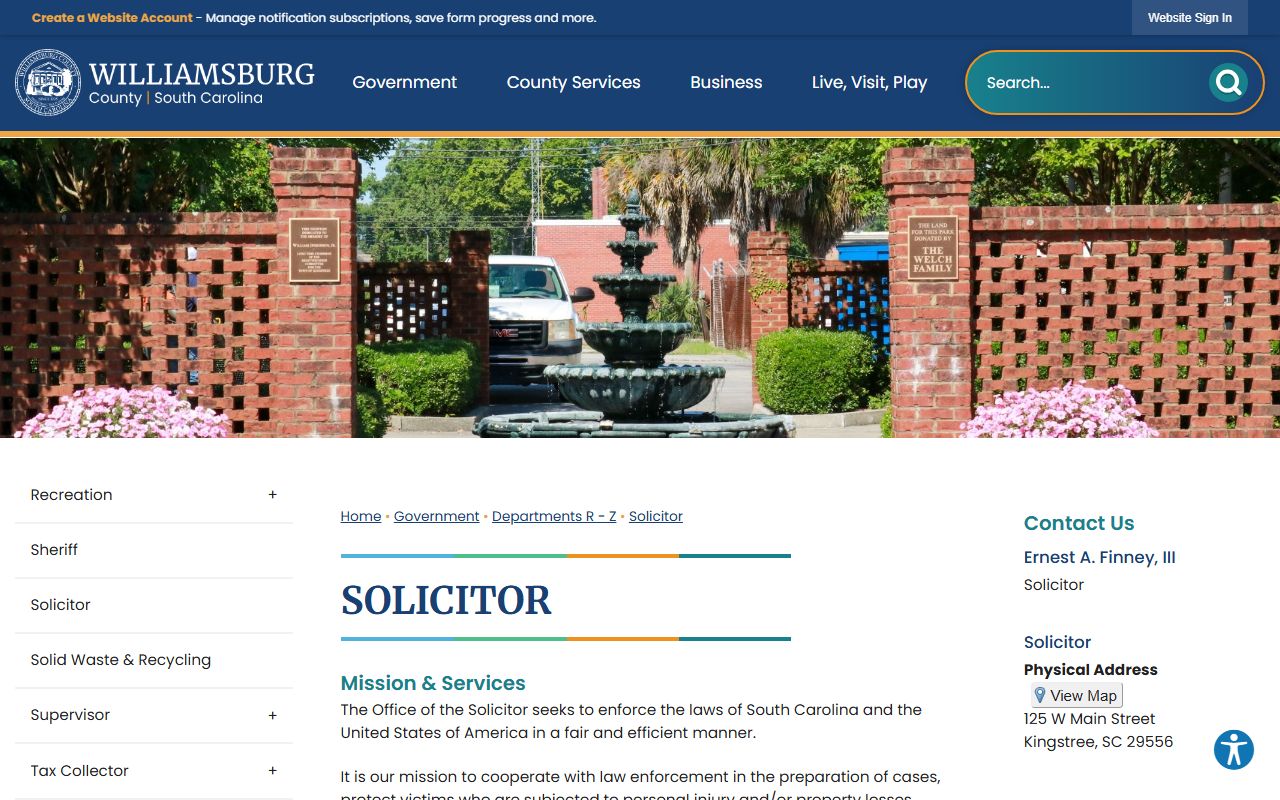
The Solicitor source helps distinguish prosecution decisions from the Clerk's role in keeping the criminal court record.
Search Williamsburg County Criminal Court Records
The main online lookup route is the South Carolina Judicial Branch Case Records Search, which routes Williamsburg County users to the Public Index for Circuit and summary court records. The Public Index search fields documented by the state include case number, name, action type, date type and date range, tax map number, court type, court agency, case type, subtype, party name, and party type. For criminal records, the most useful starting points are usually defendant name, case number, court type, date range, and action type.
- Open the South Carolina case records search and choose Williamsburg County, or open the direct Williamsburg Public Index.
- Accept the terms and complete the required security validation.
- Search by defendant name or case number, then filter by court type or case type if needed.
- Open the case and review the docket entries for charges, bond, hearings, motions, plea, disposition, and sentence.
- Contact the Clerk of Court General Sessions staff if a certified copy, disposition, or courthouse-only document is needed.
SLED CATCH is separate from the court case file. It is a fee-based South Carolina criminal-history product, and the research notes that it does not include wanted-person information. A court record can show the status and outcome of a Williamsburg County prosecution, while a state criminal history search serves a different purpose and has its own access limits.
The Third Judicial Circuit Solicitor page documents the circuit that includes Williamsburg County, Clarendon, Lee, and Sumter.

That circuit source is important when a criminal record question involves prosecution, diversion, victim services, or expungement administration rather than a copy from the Clerk.
Williamsburg County Criminal Case Stages
A Williamsburg County criminal court record grows as the case moves through the court system. An arrest or warrant may lead to bond and preliminary proceedings in Magistrate Court. The Solicitor reviews and prosecutes General Sessions matters. The Clerk records filings, bonds, trial lists, dispositions, fines, fees, restitution, bench warrants, and expungement orders. Each step can create a docket entry or document in the court file, but not every document will be public online.
Case flow: Charges Filed › Arraignment › Pretrial and Motions › Plea or Trial › Disposition › Sentencing
| Stage | What Happens |
|---|---|
| Charges filed | The charging document or warrant-based accusation enters the court process. |
| Arraignment | The defendant is called to answer the charge and case scheduling begins. |
| Pretrial and motions | The court may hear motions, set hearings, continue dates, or address bond and discovery issues. |
| Plea or trial | The case resolves by plea, jury trial, bench trial, dismissal, or another court action. |
| Disposition | The record shows the outcome of each charge or the case as a whole. |
| Sentencing | The court enters punishment or conditions such as jail, prison, probation, fines, costs, restitution, or other terms. |
Williamsburg County Criminal Record Fields
A criminal case record may combine search fields, docket entries, filed documents, and financial entries. The research could not inspect a live Williamsburg Public Index sample case because the portal requires cookies, JavaScript, and an interactive check. The fields below are therefore based on the official Public Index guide, court-file categories, and Williamsburg Clerk duties, with no claim that every field appears in every public online record.
| Field | What It Shows |
|---|---|
| Case number | The court identifier used for the General Sessions or summary court criminal case. |
| Defendant | The person charged, subject to redaction or access rules. |
| Court agency | The court handling the matter, such as General Sessions, Magistrate Court, or Municipal Court. |
| Charges | The filed offense labels, charge counts, or statutory offense references where public. |
| Bond | Release or custody-related bond information if entered in the public case record. |
| Plea | The defendant's formal answer or plea agreement status where recorded. |
| Motions and hearings | Pretrial requests, court dates, continuances, trial list activity, and judge action. |
| Disposition | The outcome, such as guilty, not guilty, dismissed, nolle prossed, or other closure. |
| Sentence | Penalty terms, probation, fines, fees, restitution, or other court conditions. |
| Expungement entry | A restricted or removed record status after an eligible expungement order. |
Williamsburg County Charges vs. Convictions
A charge is an accusation filed in court. A conviction is an outcome after a guilty plea, guilty verdict, or other qualifying adjudication. Williamsburg County criminal court records can show charges that were later dismissed, reduced, amended, nolle prossed, or resolved without a conviction. That is why a record should be read through the disposition and sentence fields, not only the charge list at the start of the case.
| Point | Charge | Conviction |
|---|---|---|
| Meaning | An accusation that an offense occurred. | A final finding or plea that establishes guilt. |
| Record stage | Appears early in the case or after amendment. | Appears at disposition or sentencing. |
| Possible change | Can be amended, reduced, dropped, dismissed, or nolle prossed. | May be followed by sentence, probation, restitution, or later expungement analysis. |
| How to verify | Read the current docket and charge status. | Read the disposition, plea or verdict, and sentence entry. |
Read Williamsburg County Criminal Dispositions
The disposition tells what happened to the case or charge. In a Williamsburg County criminal record, it may show guilty, not guilty, dismissed, acquitted, nolle prosequi, or another outcome. Nolle prosequi means the prosecution does not proceed with that charge at that time. A dismissal is not the same as a conviction. A guilty plea or verdict should be read with the sentence terms because the sentence shows what the court ordered after the outcome.
Sentence entries can include confinement, probation, fines, court costs, restitution, and other conditions. The Clerk duties page specifically mentions fines, fees, restitution, and General Sessions dispositions, so those details may matter when a person needs proof of completion or a certified disposition. For people in current custody or state prison, jail or prison searches are separate from the court case record.
Williamsburg County Sealed Criminal Records
South Carolina has both sealing and expungement concepts. A sealed criminal court record is restricted from public view by court order or rule but may still exist for authorized court or agency use. An expunged record is subject to a court order that removes, destroys, or seals eligible criminal arrest, charge, or conviction records. Public users should not expect sealed or expunged Williamsburg County criminal court records to appear in ordinary online searches.
| Point | Sealed | Expunged |
|---|---|---|
| Public visibility | Hidden from public access unless the court permits access. | Removed, destroyed, or sealed under an expungement order. |
| How it starts | A motion or legal basis to restrict public access. | An application process for eligible charges or records. |
| Williamsburg route | Handled through the court that controls the record. | General Sessions expungement starts with the Third Judicial Circuit Solicitor. |
| Key limit | Not every private fact justifies sealing. | Not every criminal record is eligible for expungement. |
The South Carolina criminal procedure statutes include expungement provisions such as solicitor administration and summary court expungement rules.
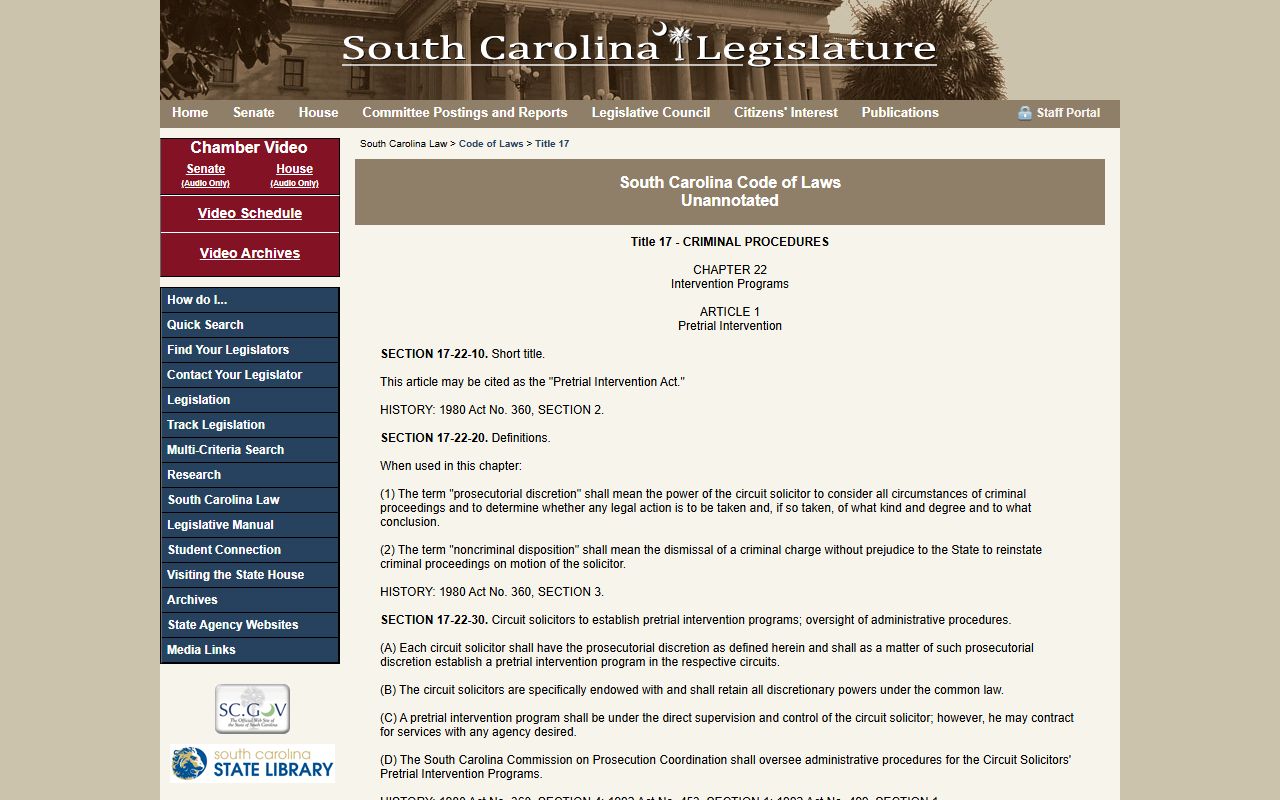
The statute source supports the distinction between a public criminal case entry and a record that has moved through the expungement process.
Williamsburg County Criminal Record Access
Adult criminal court records are generally public unless sealed, expunged, confidential, or otherwise restricted. South Carolina FOIA gives broad public access to public records, but judicial records also follow court rules. SC Rule 41.2 requires redaction of personal identifiers, and SC Rule 41.1 allows court sealing when a proper motion and required findings justify restricted access. Juvenile matters are handled separately and are generally confidential or restricted under South Carolina juvenile law.
Expungement questions for Williamsburg County General Sessions records should be directed to the Third Judicial Circuit Solicitor because South Carolina law places many expungement applications with the solicitor in the circuit where the charge originated. The research identifies the Williamsburg Solicitor office at 125 W Main Street, Kingstree, with phone 843-355-9321 ext. 7200. Statutory research also notes a solicitor administrative fee in many cases and a SLED verification fee where applicable, while some dismissed, not guilty, or nolle prossed magistrate and municipal cases follow a different summary-court route.
The Solicitor Ernest A. Finney III biography helps identify the elected prosecutor for the circuit that includes Williamsburg County.

The solicitor biography source helps identify the prosecuting authority for Williamsburg County General Sessions criminal records.
Key Statutes: S.C. Code Ann. Sections 17-22-910 and 17-22-940 place many expungement steps with the solicitor and address administrative processing.
Williamsburg County Criminal Background Limits
A public criminal court record lookup is not the same as an employment, tenant, credit, insurance, or licensing background check. A court case search can help verify case status, disposition, and sentence, but regulated background checks must follow applicable law and use proper consumer reporting channels when the Fair Credit Reporting Act applies. SLED CATCH may provide fee-based criminal history information, but it is not a wanted-person search and it does not replace direct court verification for a Williamsburg County disposition.
Important: Do not use casual court lookups as a substitute for legally compliant consumer background screening.
Restricted Williamsburg County Criminal Records
Restricted criminal records include sealed cases, expunged records, juvenile records, confidential protected-party material, and personal identifiers removed under court rules. Ongoing law enforcement material may also be withheld when disclosure would interfere with proceedings or safety under South Carolina public access exemptions. If a Public Index entry looks incomplete, the missing information may be restricted by law, withheld from online display, or available only through a courthouse request to an authorized person.