
Williamsburg County Arrest Records and Court Charges
Arrest records and court charge records are related, but they are not the same record. An arrest record points to law enforcement custody activity, such as the arresting agency, booking, detention status, bond questions, and the fact that a person was taken into custody. Williamsburg County does not publish an official online local jail roster or current booking database in the research file. For custody and bond status, the practical local route is the Williamsburg County Detention Center or Sheriff's Office, not a public mugshot search.
The charge record begins when an accusation is filed or carried into court. Williamsburg County Clerk duties state that the Clerk receives criminal warrants and bonds and transmits warrants to the Solicitor. Magistrates may issue arrest and search warrants and conduct preliminary hearings. The Solicitor prosecutes criminal cases in General Sessions. That means court charges after arrest may be visible through Magistrate Court, municipal court, the Public Index, the Clerk's General Sessions staff, or the Solicitor depending on the level and stage of the case. The full case file and final outcome belong on the Williamsburg County criminal court records page.
Find Williamsburg County Arrest Records and Charges
Start with the record type needed. For current custody or bond status, call the Williamsburg County Detention Center at the Sheriff's Office campus. For filed court charges, search the South Carolina Judicial Branch Public Index for Williamsburg County or contact the court that handled the charge. For summary criminal, traffic, warrant, bond, and preliminary hearing matters, Magistrate Court may be the right office. For town charges, municipal courts may hold the record. For felony and higher criminal prosecutions, the Clerk's General Sessions staff and the Third Judicial Circuit Solicitor are the key court-side channels.
- Check whether the question is about custody, booking, filed charges, or final case outcome.
- Use the Williamsburg County Public Index for public court case and charge information when the case is searchable online.
- Contact Magistrate Court or the municipal court if the charge stayed at the lower court level.
- Contact Clerk General Sessions staff or the Solicitor for felony or higher criminal prosecution questions.
- Use the Detention Center phone route for current custody and bond status when no online roster exists.
The Williamsburg County Magistrate criminal and traffic page documents the local summary court role in lower criminal and traffic matters.
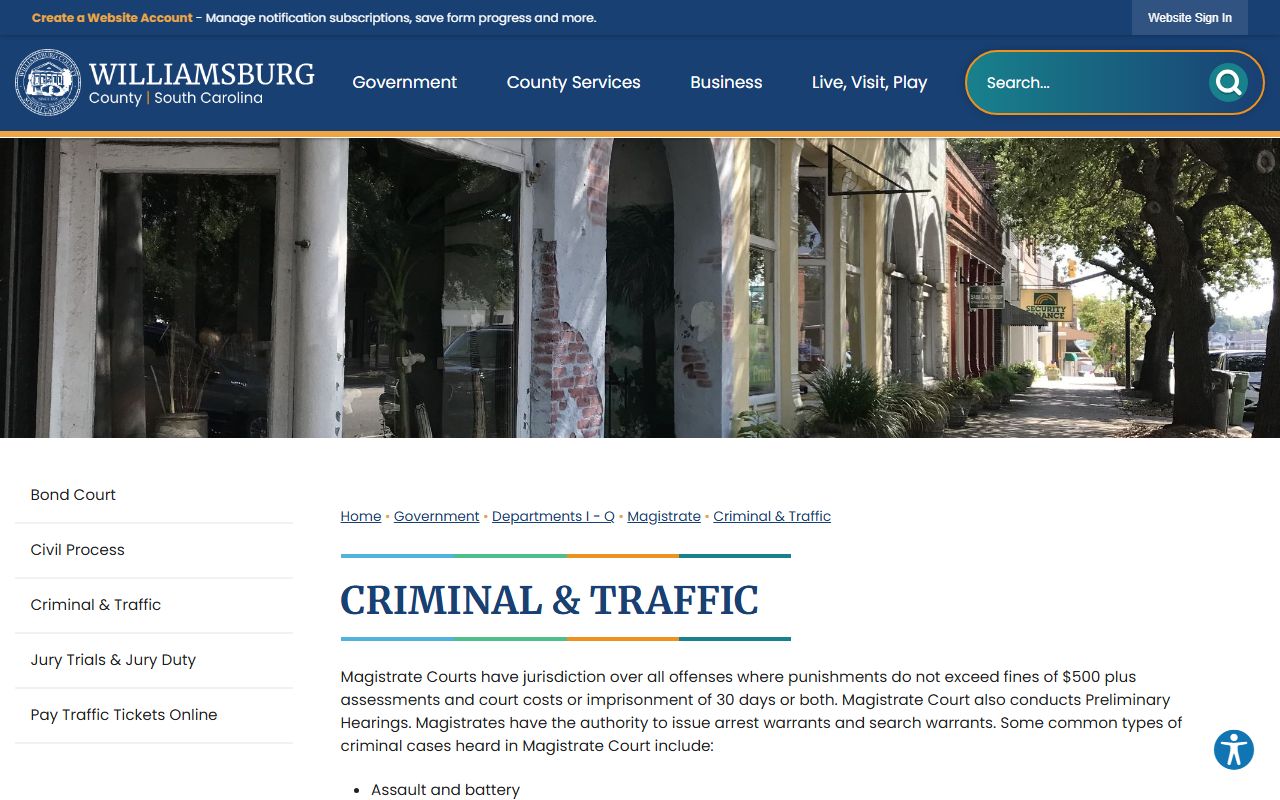
Magistrate Court is often the first court-side place to check for lower criminal charges, traffic charges, warrant matters, and preliminary hearings.
Williamsburg County Charging Documents
A court charge record is tied to the formal accusation. South Carolina practice uses several paths, and the exact path depends on case level. A lower matter may begin with a warrant, citation, complaint, or similar summary court filing. A General Sessions prosecution may involve solicitor review and grand jury indictment. The important point for Williamsburg County arrest records is that the arrest alone does not prove the final charge, and the first charge listed may not be the charge that ends the case.
| Charging Document | Filed or Initiated By | Common Use | Record Meaning |
|---|---|---|---|
| Complaint or citation | Officer, prosecutor, or summary court process | Summary criminal, traffic, ordinance, or lower court matters | Starts or documents the lower court accusation. |
| Information or solicitor filing | Prosecutor | Prosecution-stage filings and negotiated case handling | Shows the prosecutor's formal position or filing in the court case. |
| Indictment | Grand jury process through General Sessions | Felony and serious criminal prosecutions | Formal General Sessions charging document for prosecution. |
Williamsburg County is in the Third Judicial Circuit. The Solicitor is Ernest A. Finney III, and the local Williamsburg Solicitor office is listed at 125 W Main Street in Kingstree. The Solicitor's role includes prosecution of General Sessions criminal cases, plea offers, hearings, trial preparation, case dispositions, diversion programs, victim services, and many expungement applications.
Williamsburg County Charge Status
Charge status changes as the case moves. One arrest can produce multiple charges. A charge may be amended, reduced, dropped, dismissed, nolle prossed, or resolved by plea or trial. A Public Index record may show the initial charge, while later docket lines show updates. Reading only the first charge line can misstate the current status, especially when the Solicitor has amended the charge or the court has entered a later disposition.
| Status | What It Means | Where to Verify |
|---|---|---|
| Pending | The charge is still open or not yet finally resolved. | Public Index, Clerk, lower court, or Solicitor. |
| Amended | The charge label, count, or legal theory changed after filing. | Docket entries and prosecution filings. |
| Reduced | The charge moved to a lesser offense or lower severity level. | Disposition, plea, or solicitor record. |
| Dismissed | The court or prosecution ended that charge without conviction. | Disposition entry and certified court copy. |
| Nolle prosequi | The prosecution does not proceed on the charge at that time. | Disposition entry and Solicitor or Clerk record. |
| Convicted | The charge ended in a guilty plea, guilty verdict, or qualifying adjudication. | Disposition and sentence entries. |
Williamsburg County Charges vs. Convictions
Arrest records and court charge records can show accusations. They do not prove conviction by themselves. A person may be arrested and charged, then later have the charge dismissed, nolle prossed, amended, reduced, or resolved with a not guilty outcome. The conviction question is answered by the final disposition and sentence in the court case record. That is why court charges after arrest should be read together with the docket and disposition.
| Point | Charge | Conviction |
|---|---|---|
| Meaning | Formal accusation after arrest or court filing. | Final guilty outcome by plea, verdict, or qualifying adjudication. |
| Timing | Appears before final case resolution. | Appears at disposition and sentencing. |
| Can Change | Yes, it can be amended, reduced, dropped, or dismissed. | Only changes through lawful post-judgment, appeal, pardon, or expungement routes. |
| Best Source | Charge list, warrant, citation, complaint, indictment, or docket. | Disposition, judgment, plea, verdict, and sentence. |
The SLED CATCH criminal-history system is a separate statewide name search tool.
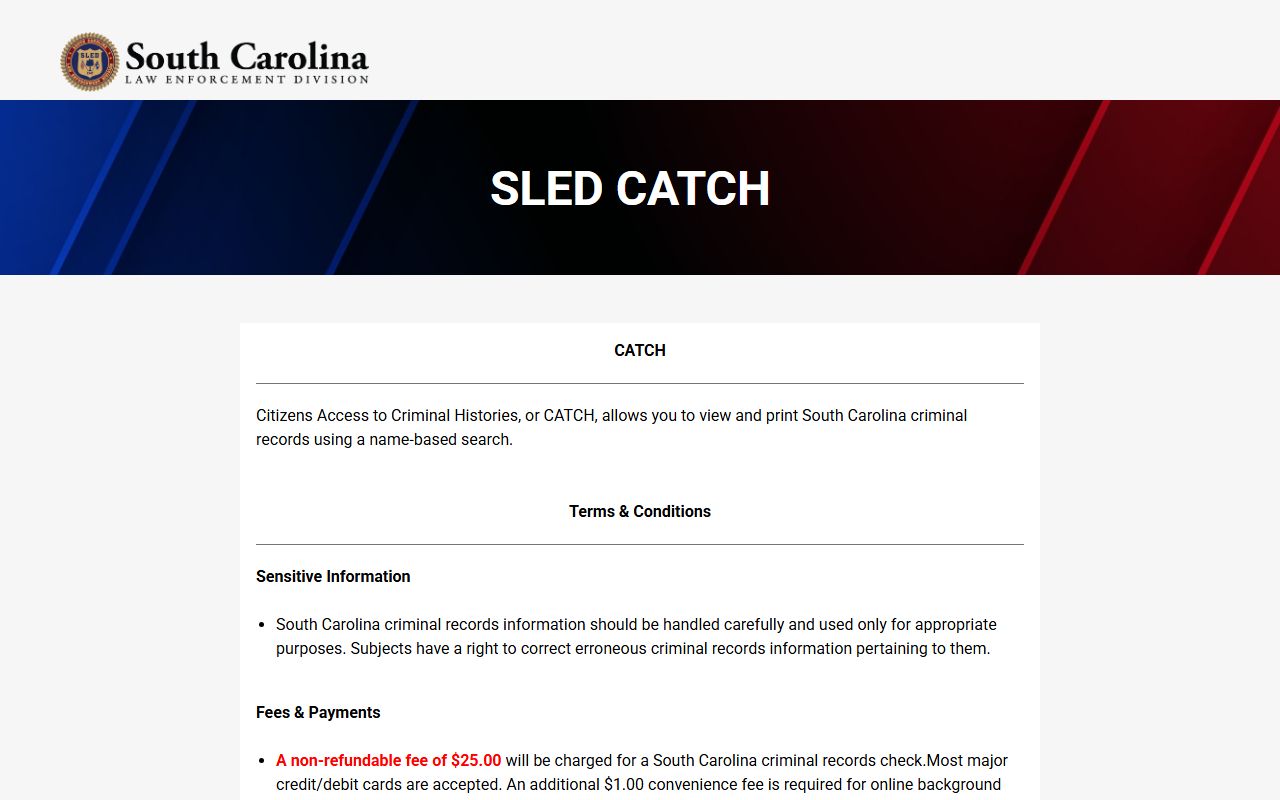
SLED CATCH should not be described as a Williamsburg County active-warrant, booking, or court docket search because the research notes that wanted-person information is excluded.
Williamsburg County Charge Codes
Charge records often use statutory offense labels, charge counts, court agency information, and severity terms. A single arrest can create several counts, and each count can have its own status. In Williamsburg County, charge level also affects which office is likely to have the best information. Summary criminal charges and traffic offenses may stay in Magistrate or municipal court. More serious criminal cases route to General Sessions and the Solicitor. Bond, warrant, and preliminary hearing activity can start in summary court even when the later prosecution moves to Circuit Court.
Kingstree Municipal Court handles charges brought by Kingstree Police except General Sessions offenses. Other Williamsburg County municipal courts may hold town-level traffic, ordinance, and minor criminal matters. That local split matters because a person searching by name in the Public Index may still need to call the municipal clerk if the town court keeps the active local file or if the issue involves a missed municipal court date.
Note: A charge code describes an accusation; the disposition tells whether that accusation became a conviction.
Williamsburg County Statewide Charge Lookups
Statewide tools can help, but each tool has a narrow purpose. SLED CATCH is a fee-based criminal-history search, not a court docket, jail roster, or wanted-person database. The SCDC inmate search covers people sentenced to and incarcerated in state prison, not county jail detainees. SC VINE and VINELink are notification channels, not official Williamsburg County booking records. The SLED Sex Offender Registry is a conviction and registration registry, not a general arrest record search.
The SLED sex offender registry information page explains a registration system that is separate from arrest and fresh charge lookup.
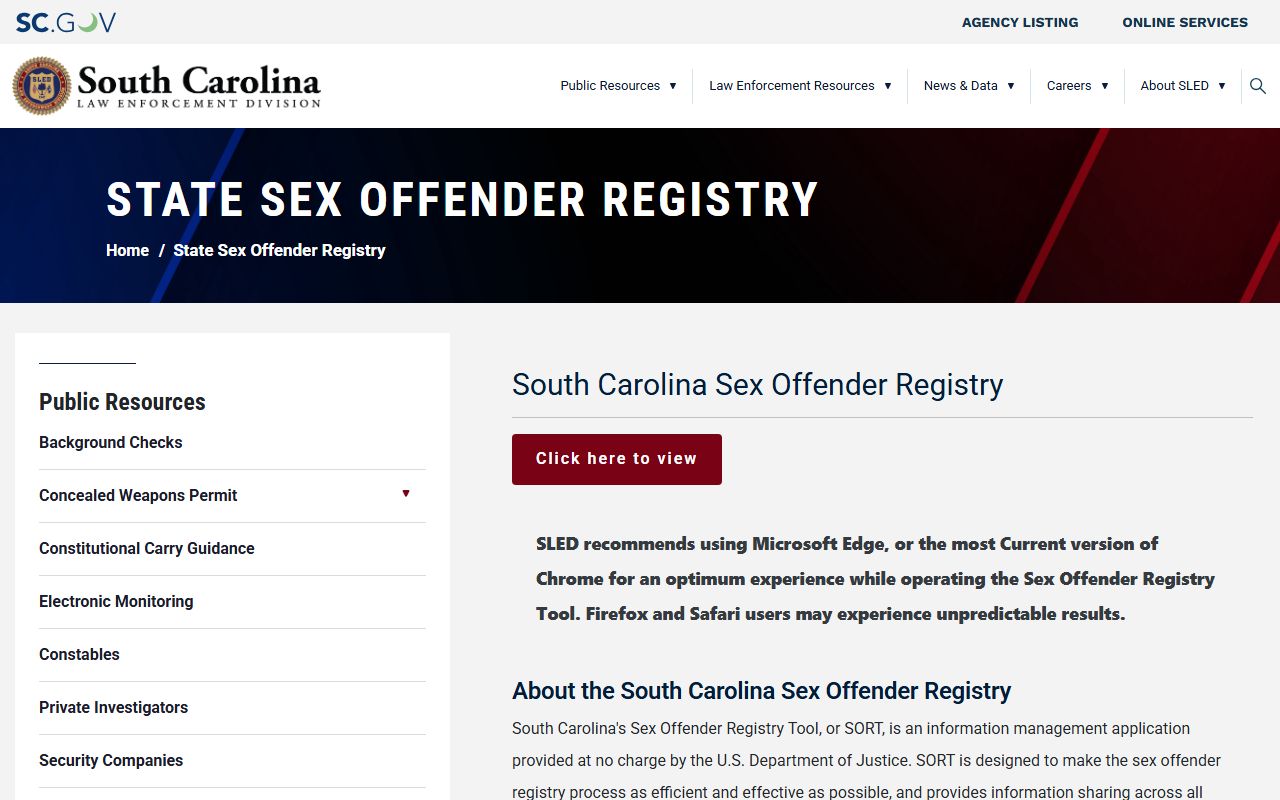
The registry source is useful only for registration research after qualifying convictions, not for checking whether a fresh arrest or charge exists.
Williamsburg County Charge Defense Roles
The Solicitor files and prosecutes criminal charges in General Sessions, handles plea offers, prepares for hearings and trials, works with law enforcement, and administers many expungement applications. The Williamsburg County Solicitor office lists a victim and witness advocate and diversion programs coordinator. The Third Judicial Circuit page also lists diversion programs such as Pretrial Intervention and Juvenile Arbitration. Those programs can affect whether charges proceed to conviction, dismissal, diversion completion, or another outcome.
Public defender information is separate from prosecution. SCCID states that a public defender is appointed by the court to represent indigent criminal defendants and that public defenders are licensed South Carolina attorneys. The SCCID Williamsburg County page lists assistant public defenders at the local courthouse, while the Kingstree Municipal Court page says a public defender applicant must complete the application form and pay the municipal clerk application fee, with the decision made by the Third Judicial Circuit Public Defenders Office in Sumter.
The SCCID Williamsburg County public defender page identifies indigent defense resources tied to local criminal charges.
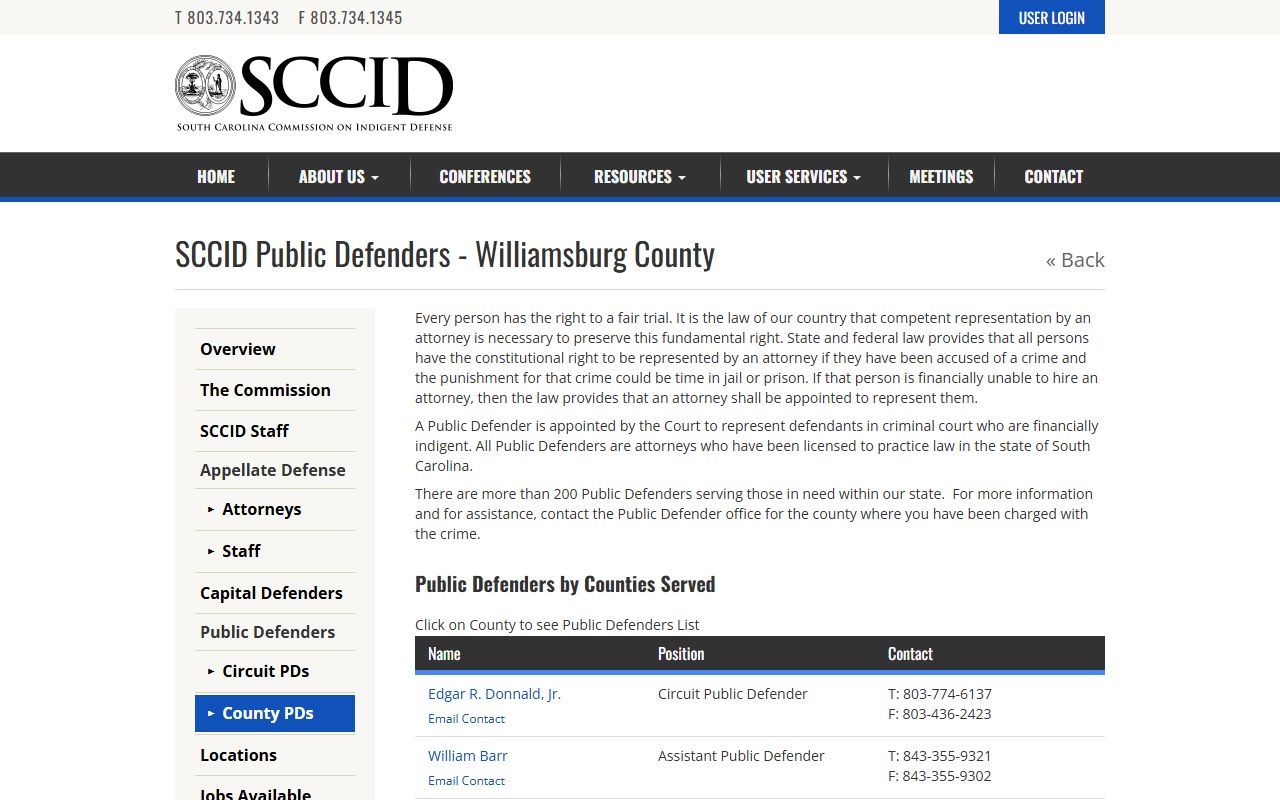
Public defender sources matter because a charge record often leads to questions about counsel, court dates, diversion, and plea or trial options.
The SCCID Christopher Cain profile adds Williamsburg County defense context through a local assistant public defender listing.
The local assistant public defender profile helps tie statewide indigent defense information to the Williamsburg County courthouse address.
Williamsburg County Expunged Charge Records
A sealed charge record is hidden from ordinary public access but may still exist for court or authorized agency use. An expunged record is subject to a court order that removes, destroys, or seals eligible criminal arrest, charge, or conviction records. South Carolina expungement for many General Sessions matters begins with the solicitor in the circuit where the charge originated. Summary court dismissed, not guilty, or nolle prossed charges may follow a different route under state law.
| Point | Sealed | Expunged |
|---|---|---|
| Public view | Restricted from public viewing by court order or rule. | Removed, destroyed, or sealed after a qualifying order. |
| Typical trigger | Privacy, safety, legal confidentiality, or protected material. | Eligibility under South Carolina expungement statutes. |
| Where to ask | The court that controls the record. | Solicitor for many General Sessions charges; summary court for eligible lower court matters. |
| Public search result | May be missing or partly hidden. | Should not appear as an ordinary public charge record after processing. |
Williamsburg County Charge Background Limits
Arrest records and court charges are easy to misread outside the court context. A public search result may show a charge that did not end in conviction. A booking or custody record may not show later prosecution decisions. A criminal-history product may omit wanted-person data or use state-level rules that differ from the courthouse case file. For any regulated screening purpose, use a legally compliant consumer reporting process rather than a casual court or arrest lookup.
Important: Do not treat an arrest entry or filed charge as proof that a person was convicted.
Restricted Williamsburg County Charge Records
Restricted charge records include juvenile charges, sealed matters, expunged charges, protected-party information, certain law enforcement records, and personal identifiers redacted under court rules. Family Court juvenile matters are not general public lookup records. South Carolina Rule 41.2 also removes or masks Social Security numbers, taxpayer IDs, financial account numbers, protected addresses, certain minor names, and date-of-birth details. If a charge record is not visible online, confirm the status with the issuing court or Clerk before assuming no record exists.