
How to Search Williamsburg County Court Records
The main online path for Williamsburg County court records is the South Carolina Judicial Branch Case Records Search. The state selector lists Williamsburg County as Circuit Number 3 and County Number 45, then routes public users to the county Public Index. The direct Williamsburg County Public Index is the primary search channel for public Circuit Court and Magistrate Court case information. It is useful for civil filings, General Sessions criminal matters, lower criminal cases, traffic-related summary cases, and case events that are open to the public.
The Public Index is not the only access point. Family Court records use the statewide Family Court public portal, appellate records use C-Track, and Probate Court states that estate and marriage license records are not available through an online search. Some municipal court records may appear in state tools, but municipal courts also keep their own clerk channels. If an online search does not show the file, the next step is to contact the court that handled the case instead of assuming no record exists.
- Open the state case records page and choose Williamsburg County, or open the direct Public Index link.
- Read the terms and conditions. The official Public Index guide says the user must accept them before searching.
- Complete the security check by entering the code and validating it when prompted.
- Search from the record screen by case number, name, action type, date type and date range, or tax map number.
- Use filters such as court type, court agency, case type, party type, action type, or date range when results are too broad.
- Open the case result and confirm the court, parties, event history, and disposition where public access allows.
For a fuller case history, the docket may show more than one event. A hearing, motion, judgment, bond entry, or disposition can each appear as a separate line. The complete case file may still require a clerk request when images are redacted, removed from online view, sealed, or available only at the courthouse. For event timing and calendar entries, the related Williamsburg County court dockets page may be the better starting point.
Williamsburg County Court Records Search Fields
The Public Index guide is an official South Carolina Judicial Department source, but it is not a Williamsburg-only screenshot. That matters because exact dropdown values can vary or may not be visible until the live portal loads in a browser. The fields below should be read as the confirmed official search criteria and filters, not as a promise that every dropdown option can be seen without JavaScript, cookies, and the security check.
| Field Label | Type | Required | Notes / Format |
|---|---|---|---|
| Case # | Text | No | Best when the exact court case number is known. |
| Name | Text | No | Searches party names, including people or business parties. |
| Action Type | Text or dropdown | No | Can locate events such as motions, foreclosures, ADR entries, or other actions. |
| Date Type | Dropdown | No | Used with date ranges to narrow filing or action timing. |
| Date Range | Date fields | No | Useful when the case name is common or the filing date is known. |
| Tax Map # | Text | No | Helpful for land, foreclosure, and property-linked civil records. |
| Court Type | Dropdown or filter | No | Limits results by court level where available. |
| Court Agency | Dropdown or filter | No | Limits results to a specific court office or agency. |
| Case Type / SubType | Dropdown or filter | No | Can separate civil, criminal, appeal, or narrower record groups. |
| Party type | Dropdown or filter | No | Examples in the guide include defendant or plaintiff. |
The official Public Index guide documents the terms screen, security check, search criteria, and result filters that support Williamsburg County court records lookup. The guide facts are useful even when the PDF itself does not provide a usable screenshot image.
Types of Williamsburg County Court Records
Williamsburg County court records follow South Carolina's court structure. Circuit Court is the general trial court, with Court of Common Pleas handling civil matters and Court of General Sessions handling criminal matters. Family Court is a separate statewide court for divorce, custody, support, adoption, DSS, juvenile, and related domestic matters. Probate Court is local to the county and handles estates, guardianships, conservatorships, marriage licenses, minor settlements, and commitment matters. Magistrate and municipal courts handle summary criminal, traffic, ordinance, warrant, bond, preliminary hearing, and smaller civil matters.
The county Clerk of Court page gives unusually specific local detail. Common Pleas records can include car accident cases, claim and delivery or repossession, condemnations, foreclosures, post-conviction relief hearings, arbitration, attachments, motion hearings, new civil cases, judgments, and jury or non-jury rosters. General Sessions records can include warrants, bonds, criminal dispositions, fines, fees, restitution, expungement processing, and bench warrant entries. Family Court records can include divorce decrees, child support orders, custody filings, alimony, paternity, DSS matters, adoptions, emergency domestic protective hearings, and rules to show cause.
The South Carolina appellate C-Track search is a separate tool for Supreme Court and Court of Appeals cases. It does not start a Williamsburg County trial case, but it can matter if a local Circuit Court or Family Court decision is appealed.
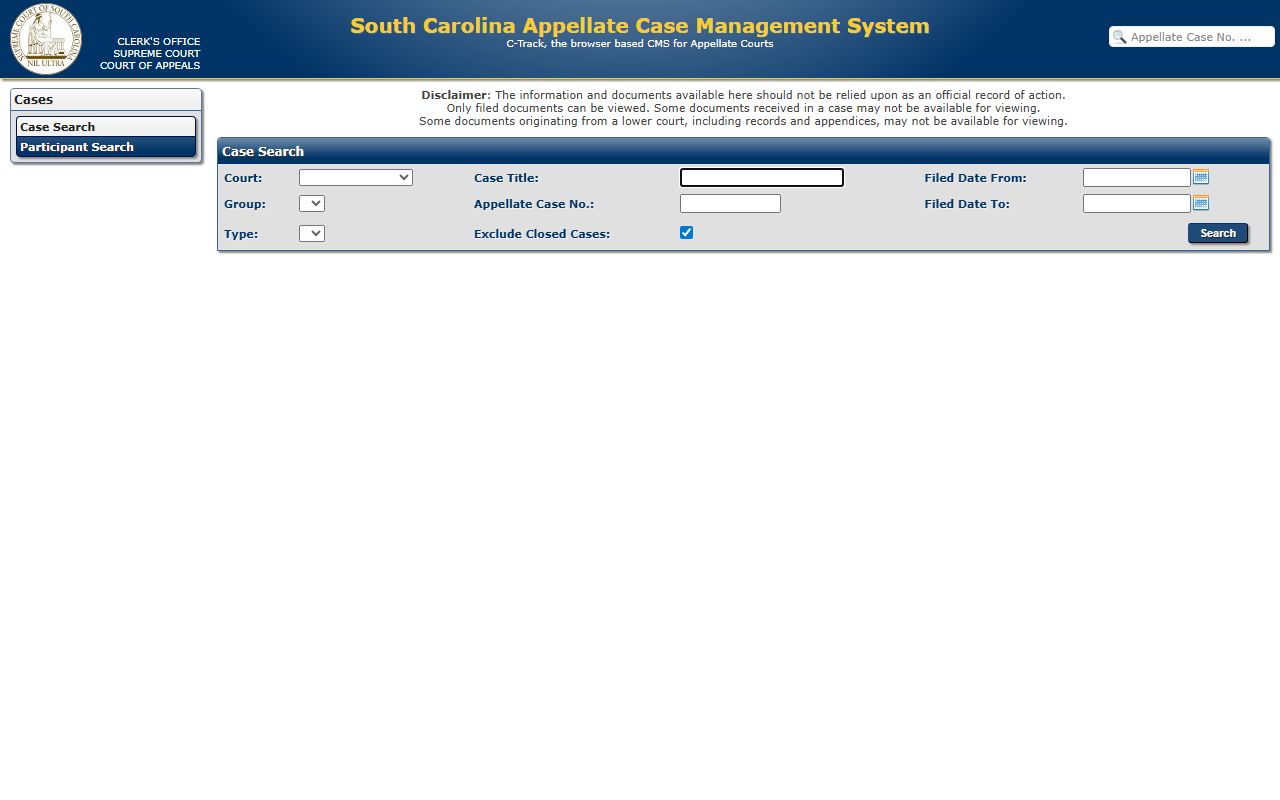
C-Track helps place Williamsburg County court records in the state appeal path, while the Public Index remains the usual source for local trial court lookup.
- Civil court records: complaints, answers, motions, affidavits, orders, judgments, satisfactions, foreclosure papers, and appeal notices.
- Criminal court records: indictments, bond papers, solicitor filings, pleas, dispositions, sentences, restitution, probation terms, and expungement orders.
- Family Court records: divorce, custody, support, adoption, juvenile, DSS, and domestic protective hearing records, with more confidentiality controls.
- Probate records: estate, will, guardianship, conservatorship, trust, minor settlement, marriage license, and commitment records.
- Summary court records: Magistrate Court and municipal criminal, traffic, ordinance, bond, warrant, and preliminary hearing records.
What Williamsburg County Court Records Show
Williamsburg County court records are built from the case events and documents that a court receives or enters. A case may begin with a complaint, petition, citation, warrant, indictment, or other initiating paper. Later entries can show service, motions, hearings, continuances, orders, judgments, pleas, sentencing, restitution, fines, and appeal notices. The online view can be narrower than the courthouse file because public images may be limited, redacted, or removed under court rules.
| Field | What It Shows |
|---|---|
| Case number or docket number | The court's official identifier for the case. |
| Court and court agency | Whether the matter is in Circuit, Magistrate, Municipal, Family, Probate, or appellate court. |
| Case type and subtype | The broad category, such as civil, criminal, appeal, family, or summary court matter. |
| Parties and party type | Names of plaintiffs, defendants, petitioners, respondents, or business parties when public. |
| Attorneys | Lawyers connected to the case if listed in the public record. |
| Docket entries | Motions, hearings, orders, continuances, trial lists, warrants, bonds, judgments, and dispositions. |
| Financial entries | Fines, fees, court costs, bond, restitution, or other amounts when visible for the case type. |
| Documents or images | Filed documents when the public portal or courthouse access allows viewing. |
| Redactions | Masked or removed personal identifiers, protected addresses, minor names, and financial data. |
The South Carolina Judicial Branch C-Track public access overview explains that appellate users may view events and basic case information, and in many cases event documents are viewable unless non-public, sealed, or confidential.
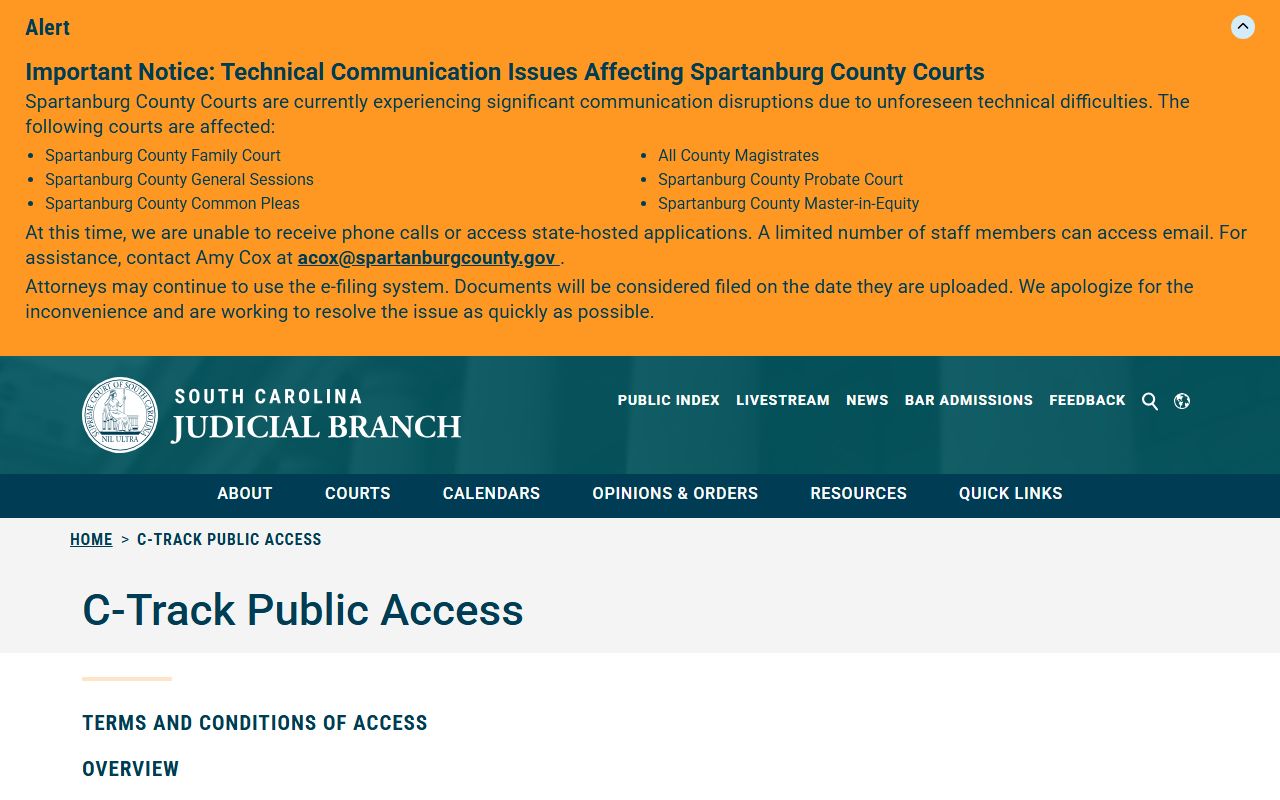
That appellate access model is narrower than a local clerk file request, so it should be used for appealed cases rather than routine Williamsburg County trial searches.
Public Access for Williamsburg County Court Records
South Carolina law and court rules work together. S.C. Code Ann. Section 30-4-30 gives a person the right to inspect, copy, or receive electronic transmission of public records unless an exemption or another law applies. Section 30-4-40 allows public bodies to withhold exempt information, including some law enforcement material, personal privacy data, and records closed by another statute. Judicial records also have court-rule controls that differ from ordinary county agency files.
SC Rule 41.2 requires redaction of personal identifiers such as Social Security numbers, taxpayer IDs, financial account numbers, certain minor names, protected addresses, and date-of-birth details. The Public Index notice captured in the research also says home address information is no longer displayed for new or existing cases beginning January 1, 2026. Those rules explain why a public case may exist while a specific address, document image, or identifier is not shown online.
The South Carolina Rule 41.2 source page shows the redaction rule that affects public court images and copied records.
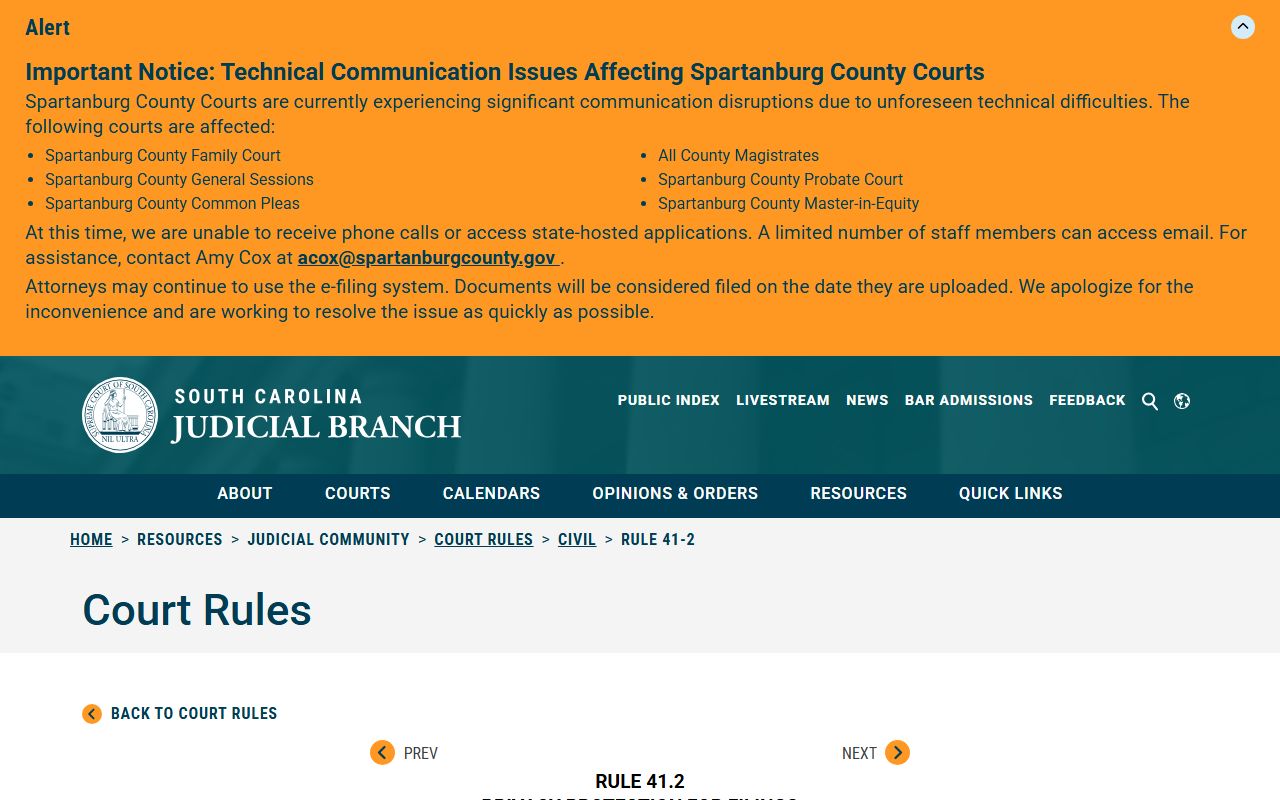
Rule 41.2 is most important when a Williamsburg County case record exists but sensitive details have been removed from the public image or portal display.
Note: County agency FOIA requests and court clerk record requests are different routes, even when both involve public records.
Restricted Williamsburg County Court Records
Some Williamsburg County court records are not general public lookup records. Juvenile matters in Family Court are restricted. Adoption records are outside ordinary public access. Probate commitment records are confidential and may be accessed only by individual or guardian consent, court order, or specific agency and welfare reasons. Family records can also contain minor names, protected addresses, financial details, DSS material, abuse allegations, and other information that may be redacted or sealed.
SC Rule 41.1 recognizes that court records are generally open, but it permits sealing when a party files a motion that identifies the record, states the reasons for sealing, addresses alternatives, and weighs public and private interests. Sealed records should not be treated as available through the Public Index. Expunged criminal records are even more limited because the process removes, destroys, or seals eligible arrest, charge, or conviction records by court order.
The Rule 41.1 sealing procedure explains how a court record can move out of ordinary public view.
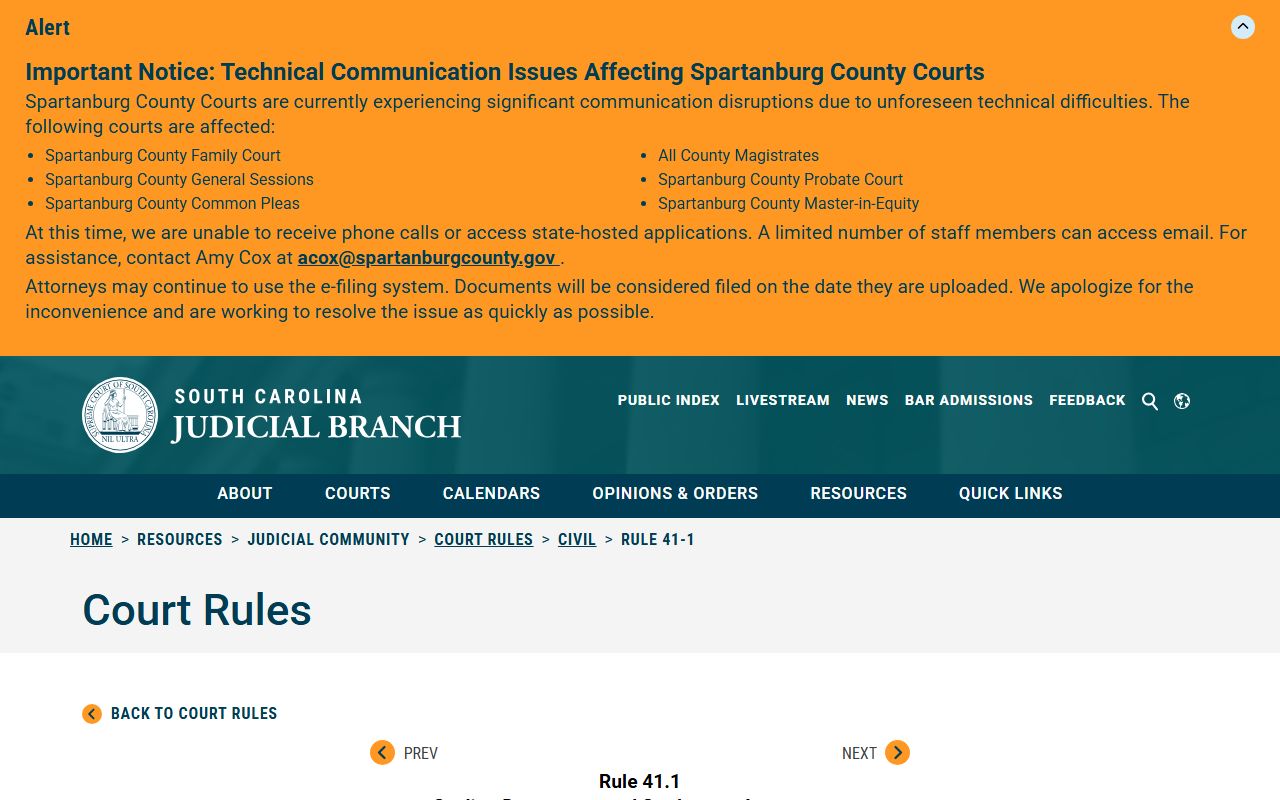
Sealing is case-specific, so the absence of an online document does not always mean the full file is unavailable to every authorized person.
SC Appellate Court Rule 610 also limits bulk or compiled access to judicial records for commercial use.
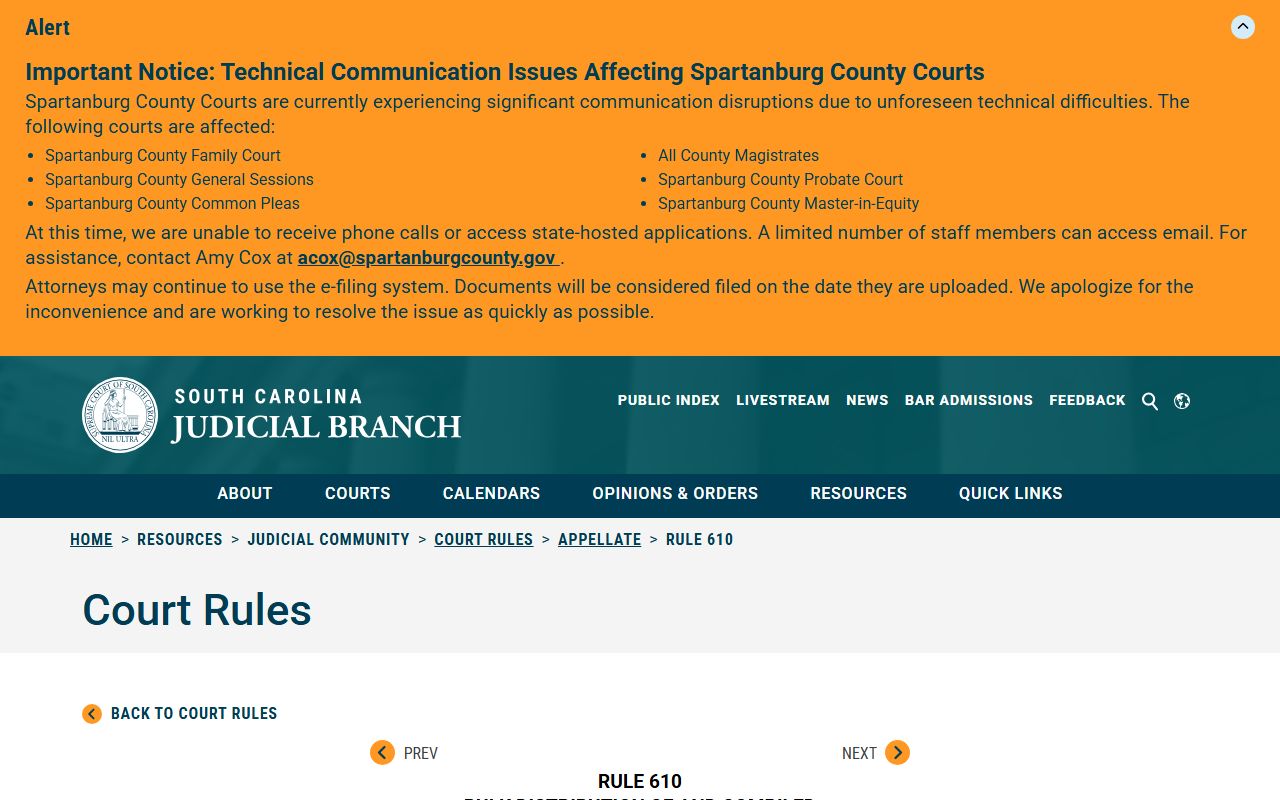
Rule 610 is a reminder that individual case lookup and bulk record access are not the same type of judicial record request.
In-Person Williamsburg County Court Record Requests
When the online path is incomplete, use the office that keeps the record. The Clerk of Court handles Circuit Court, Family Court, and Register of Deeds functions at the county level. The Clerk receives criminal warrants and bonds, transmits warrants to the Solicitor, processes civil paperwork, manages trial lists, staffs courtrooms, handles dispositions, and supports Family Court files. Probate Court should be used for estate and marriage license records because the county states those are not available online. Magistrate Court should be used for summary criminal, traffic, bond, warrant, and preliminary hearing matters.
Before visiting, call the office tied to the record type. The research found an address discrepancy for Family Court: the South Carolina Judicial Branch lists a Family Court courthouse address, while the county Clerk page routes the Family Court Division to a different West Main Street address. Calling ahead is the safest way to confirm the correct counter, current hours, copy cost, and whether a certified copy can be issued that day.
Williamsburg County Clerk of Court
125 W Main Street
Kingstree, SC 29556-3343
843-355-9321 ext. 7100
Clerk fax: 843-355-1580
Williamsburg County Magistrate Office
209 Short Street
Kingstree, SC 29556
843-355-9565
Monday-Friday, 7:30 a.m.-4:30 p.m.